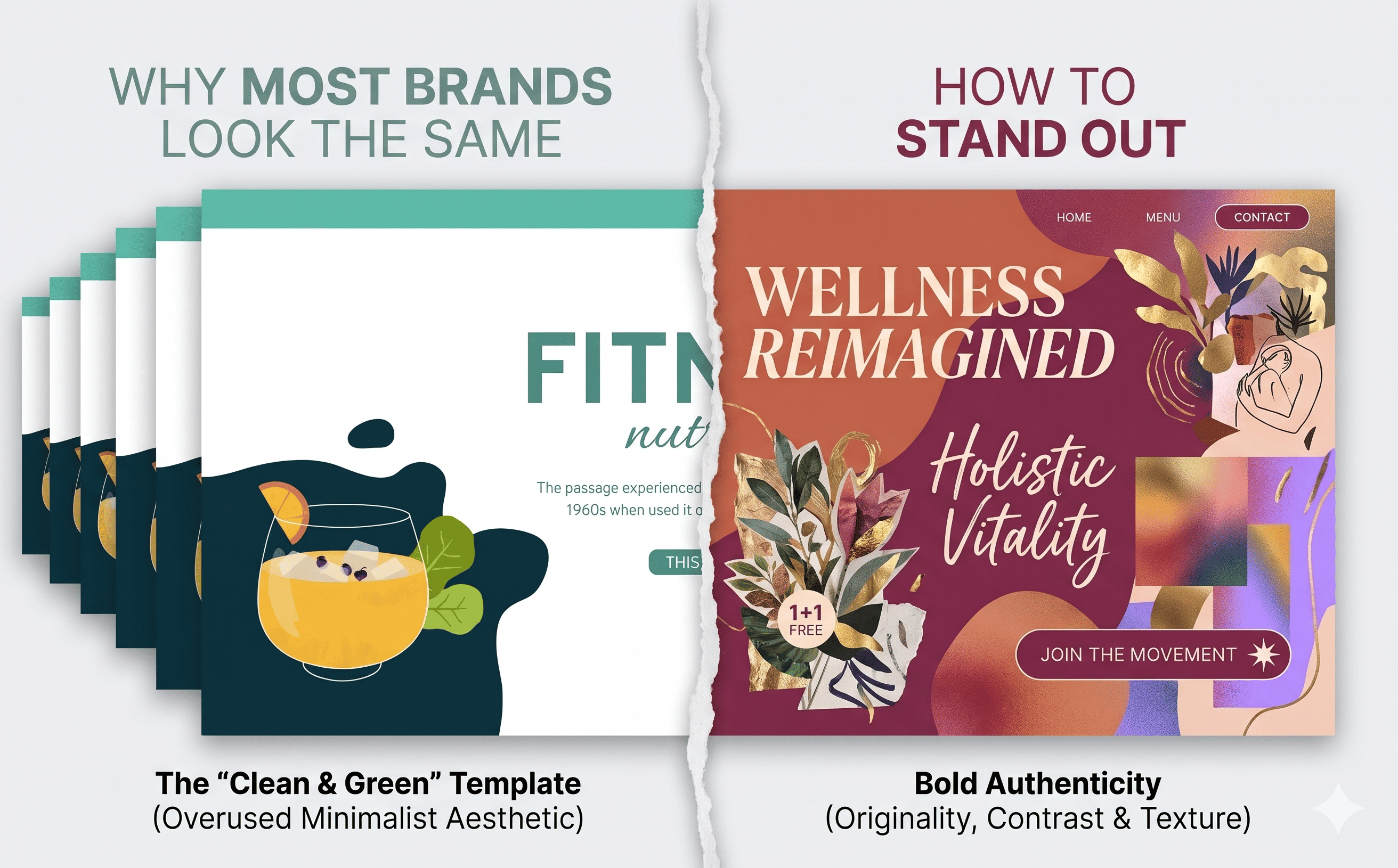
Wellness branding is the work of shaping how a health, fitness or wellbeing business is positioned, recognised and trusted, from its brand strategy and tone of voice to its logo, colour palette and website. In 2026, it has a sameness problem. Open ten wellness websites, and you will see the same sage green, the same soft serif and the same promise of "balance".
That sameness is expensive. When a Pilates studio, a spa, a supplement label, and a therapy practice all look alike, customers have no visual or verbal reason to pick one over another. They fall back on price, location, or whoever shows up first in Google and AI answers.
This guide explains what wellness branding actually includes, why so many wellness brands end up looking identical, and how to build a wellness brand identity that is distinctive, credible, and safe under UK advertising rules. It draws on our work as a London branding agency and on a fresh review of what currently ranks for the topic.
In short:
Wellness branding is how a wellness business defines who it serves, what it stands for and how it looks, sounds and behaves across every touchpoint. It applies to Pilates and yoga studios, spas, clinics, therapists, nutrition and supplement brands, retreats and wellbeing apps. Wellness marketing then carries that brand to the people you want to reach. Branding sets the position, and marketing spreads it.
A complete health and wellness branding project usually covers six layers:
If you want the full process, our brand development service walks through how these layers fit together.
Wellness branding leans on lifestyle, daily routines and personal wellbeing. Medical and clinical branding leans on credentials, evidence and regulation. Many businesses sit in between, such as physiotherapy clinics, nutrition practices and longevity brands, and they need to be warm and credible at once. That balance is the hardest part of the job, and it is where most wellness brands go wrong.
Most wellness brands look the same because they borrow from the same moodboards, avoid looking clinical or loud, and never decide what they actually believe. Several wellness branding guides make the same observation: the category has settled on a standard look of sage green, a soft serif font, and abstract botanical imagery, as Chloe Leonard puts it. Rose Benedict Design adds that stock phrases about whole-person healing and starting a wellness journey have been repeated so often they no longer set anyone apart.
Four forces drive the sameness:
None of these are wrong on their own. The problem is using all of them together, because then the brand is interchangeable. Distinctiveness comes from a few deliberate choices that only your business could make.
A wellness brand stands out when it has a clear point of view, serves a specific audience, makes claims it can prove, and expresses all of that through a few distinctive identity choices. Here are the five moves we work through with wellness clients.
A point of view is something your competitors would not say. "We deliver personalised care" is something every studio says. "We teach Pilates to people who have been told to stop exercising" is a position. A simple test: if every wellness practice could endorse your positioning statement, it is generic. This is the work of brand strategy, and it should always come before design.
Brands that try to appeal to everyone end up sounding like no one. Decide who your best clients are, what they are trying to change in their lives and what they are tired of hearing from other wellness brands. Then write and design for them.
Credible wellness branding rests on a simple rule: what you say must match what you do. Wellness consumers have seen enough overpromising to be sceptical, and a bold claim without evidence starts you from distrust. Build your brand story on things you can show, such as your training, your method, your history and your real client experience.
You do not need to reinvent everything. Pick the elements people will remember, such as an unusual colour, a confident typeface, a recognisable photographic style or a signature phrase, and use them consistently. Our guide to brand identity design explains how these pieces work together.
Wellness is experienced, not just seen. The way your front desk greets people, the sound of your booking confirmation email and the smell of the studio are all part of the brand. A beautiful logo on a confusing website or an impersonal first class will not hold up. If your brand has started to feel out of step with the business, read signs your brand needs a refresh, not a full rebrand.
In the UK, a wellness brand's voice and visuals can break advertising rules if they imply health or medical benefits the brand cannot support. The Advertising Standards Authority (ASA) is actively looking at the sector. Its Pulse study reviewed 309,000 online ads and flagged seven areas of regulatory concern, with medical-style claims on supplements a frequent issue, according to NutraIngredients. Trip Drinks withdrew an ad after the ASA ruled that claims about reducing anxiety and stress broke the rules, as DesignRush reported.
This matters for branding, not just for legal teams, because tone of voice, taglines, imagery and testimonials all create an impression of a health benefit. Law firm Freeths notes that gut health and sleep are especially tricky areas, because there are no authorised claims about sleep quality on the register and most gut health claims are not authorised (Global Legal Post). Health and nutrition claims in the UK are largely governed through the CAP Code and the Great Britain Nutrition and Health Claims Register (Food Manufacture).
This is not legal advice, so have any health-related wording checked by a specialist. But a few brand-level habits reduce the risk:
Handled well, this becomes a branding advantage. Brands that communicate clearly and precisely read as more trustworthy, in a category where scepticism is the default.
A strong wellness brand identity uses colour, type, imagery and tone of voice to express one clear idea, rather than a general feeling of calm. Here is how to approach each element.

Pilates is a good test case, because the category is full of near-identical studios with similar palettes, fonts and photography. Curious Brand has worked with BASI Pilates on brand development, website design and social media. You can see how that project came together in the BASI Pilates case study. The lesson carries across wellness: when the category all looks the same, a clear idea expressed consistently across the brand, website and social content is what gets a business remembered.
Website design is where identity becomes real for most wellness customers. A fast, clear site with an honest about page and a simple booking path often does more for trust than any logo. If you are planning a new site, our website design team can build it around your brand from the start.
The most common wellness branding mistakes come from skipping strategy, copying competitors, and overpromising. Watch for these:
Wellness branding is how a health, fitness or wellbeing business defines its position, identity and voice so customers recognise it and trust it. It includes brand strategy, messaging, visual identity, tone of voice and the customer experience across the website, social media and physical spaces.
A wellness branding agency helps a business define its audience and point of difference, then turns that into a brand identity, tone of voice, website and guidelines. At Curious Brand, our brand development work starts with strategy and moves into design and communication.
Wellness branding emphasises lifestyle, routine and personal wellbeing, while medical branding emphasises credentials, evidence and regulation. Businesses between the two, such as clinics and nutrition practices, need a brand that feels human and credible, and careful wording on health claims.
A good wellness brand identity expresses one clear idea through colour, typography, imagery and voice, and applies it consistently everywhere. It is distinctive enough to be recognised, simple enough to use daily and honest enough to build trust.
Start by choosing a clear point of view and a specific audience. Then make two or three bold identity choices, such as an unexpected colour, a confident typeface or your own photography, and avoid common clichés like stock stones, leaves and generic wellness slogans.
Yes. Wellness brands advertising in the UK must follow the CAP Code, and health or nutrition claims generally need to be authorised or substantiated. Avoid implying that a product or service treats or prevents a condition, and get any health wording reviewed by a specialist.
The cost depends on scope, such as whether you need strategy, a full visual identity, a website and ongoing content. A focused identity project costs less than a full rebrand with a new website. Get in touch, and we can scope it around your goals.
Yes. A clear, consistent brand makes it easier for search engines and AI tools to understand who you are and cite you accurately. See our guide on how branding affects SEO and our SEO service.
Refresh when your core idea still works but the visuals or messaging feel dated or inconsistent. Rebrand when the business has changed direction or the position no longer fits. Our guide on signs your brand needs a refresh, not a full rebrand explains the difference.
The wellness brands people remember in 2026 are the ones that say something specific, prove it, and look like nobody else. A sage green logo will not get you there, but a clear idea, expressed consistently and backed by honest claims, will.
If your wellness brand looks like everyone else's, we would like to help. Explore our brand development service, see the BASI Pilates case study, or talk to the Curious Brand team about your project.